
'Nuremberg' star John Slattery on why the movie will be 'relevant for years to come'





Even 80 years after the end of WWII, we are still trying to understand the horrors perpetrated by the Nazis.
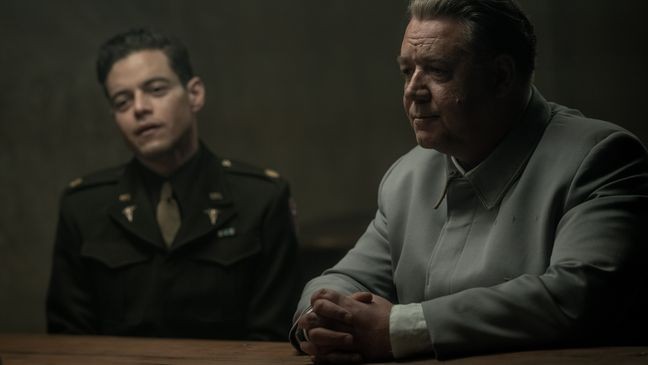
That’s what the new historical drama, “Nuremberg,” attempts to do, focusing on the lesser-known story of Dr. Douglas Kelley (Rami Malek), a psychiatrist tasked with assessing the mental state of Hermann Göring (Russell Crowe), Hitler’s second-in-command, along with other high-ranking Nazi officials.
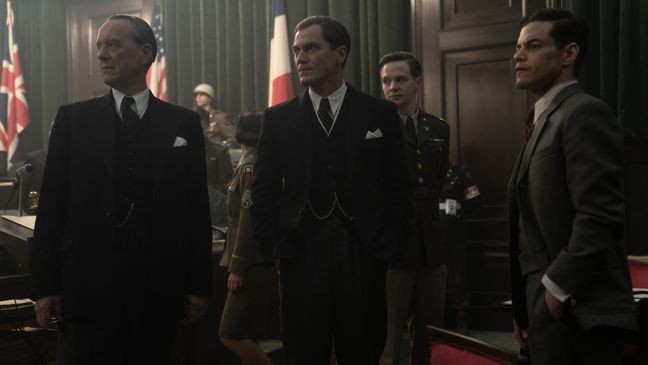
It also examines the formation of the international tribunal assembled to bring the Nazis to some kind of justice, led by U.S. prosecutor and Supreme Court Justice Robert H. Jackson (Michael Shannon), David Maxwell-Fyfe (Richard E. Grant), Col. John Amen (Mark O’Brien), as well as Sgt. Howie Triest (Leo Woodall) and Gustave Gilbert (Colin Hanks).
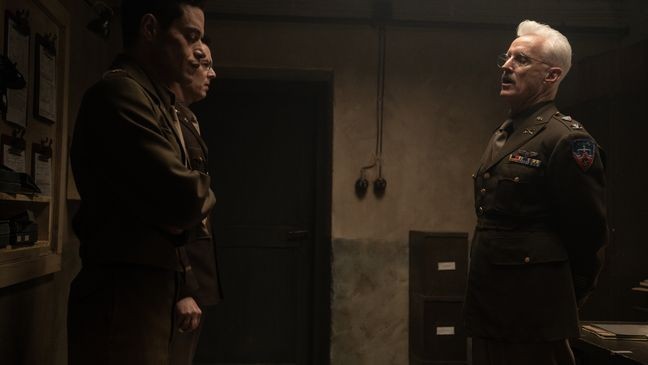
“Mad Men” alum John Slattery plays Colonel Burton C. Andrus, the U.S. officer running the Nuremberg prison where the Nazis are held while awaiting trial.
“There's an obvious relevance and parallels to what's happening in the world today. And whether that's a coincidence because he's been [director] Jamie Vanderbiltworking on this material for a long time or not, it is relevant and I sadly, have a feeling it'll be relevant for years to come,” Slattery told us.
Slattery’s Andrus is skeptical of Dr. Kelley’s methods, especially as he becomes further locked in a psychological back and forth with Göring.
Explaining Andrus’ hesitation about Dr. Kelley, Slattery explained, “Well, I think he'd spent the last five years in this war, and had seen the destruction in the devastation that the Nazis had perpetrated on their own people, among others and I think, like a lot of people, [felt] these people deserve to be executed, and let's get the hell out of here.”
“That wasn't the assignment, and that wasn't and then once the assignment was given, then it was his job to carry it out and do it well,” he continued. “And the eyes of the world were on all these people. And so he was suspect of Doug Kelly and his function, but I think came to realize that any advantage they had in this situation was important, because each one of these Nazis had their own counsel, and this, again, it was a high wire act, and they had to do it properly, and there was no room for error.”
One of the most harrowing scenes in the film takes place during the trial, when the judges, plaintiffs, defense, and gathered press and other audience members in the court room are shown newsreel footage of the victims of the concentration camp, both those that survived and those that didn’t. It’s hard to believe, but for some people, it was the first time they truly knew what happened in the concentration camps, and the impact is felt on screen.
“It's a devastating sequence of footage that you see and it's unbelievable,” Slattery said.
To film the scene, he explained that “there was just one day, and they said we're only going to show this to you once, because they didn't want to put people through that over and over again. So, they showed the background people once. They showed everybody once, and depending on the shot we sat there and watched it that one time. And whatever the reaction was, that was the reaction to watching it.”
Slattery admitted that playing a colonel, “It was hard to figure, how would this character react to it? I didn't really have an answer. So, I just thought, well, as a human being, I'm just going to watch this thing and then they can use it or not.”
“Nuremberg” is in theaters November 7.
