
'The Gilded Age' season 3 is here: Four reasons to love this star-studded guilty pleasure

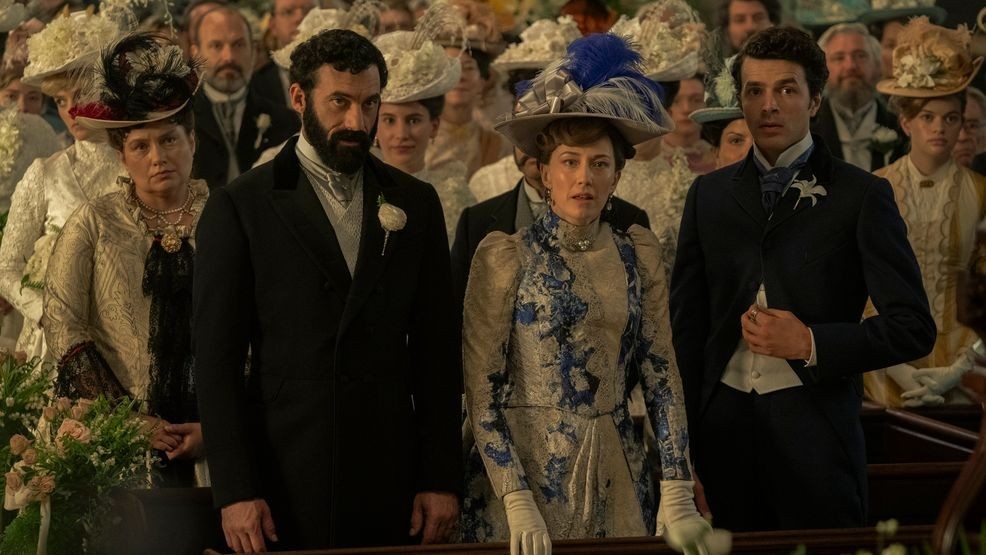
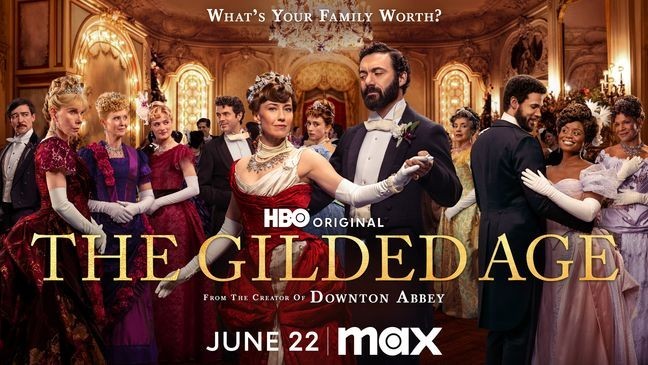
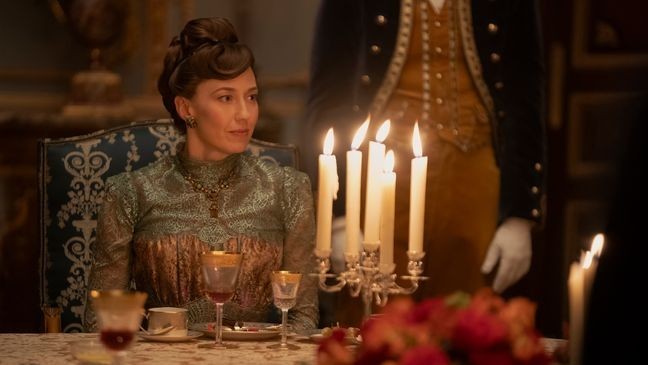

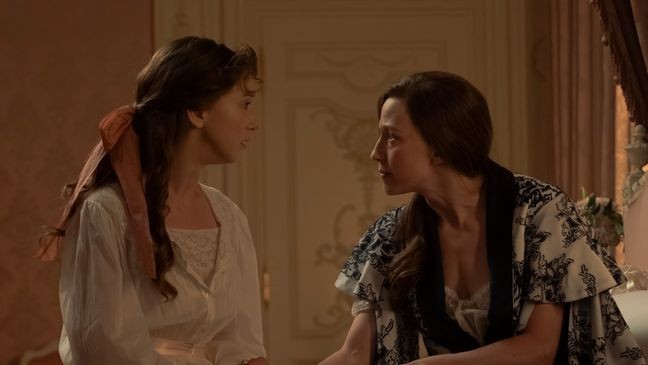


Fans of lavish costumes, melodrama, and history rejoice, “The Gilded Age” is back for season three!
The premiere episode aired on HBO last night, picking up a few months after the season finale that saw fortunes flipped, clocks being invented, and behind the scenes matchmaking against people’s wills.
Agnes Van Rijhn (Christine Baranski) has been rendered penniless by her ne’er-do-well son, Oscar (Blake Ritson), while her recently widowed sister Ada (Cynthia Nixon) is now managing the fortune of her late husband. Ada and Agnes are continually clashing over rules in their household now that Ada controls the purse strings.
Across the street, George Russell (Morgan Spector) is in Arizona trying to expand his railroad empire, while wife Bertha (Carrie Coon) is working overtime to manage their daughter Gladys’ (Taissa Farmiga) potential marriage to a British Duke, even though she wants to pursue her true love with Billy Carlton (Matt Walker).
“Bertha sees what she is doing for Gladys, which is setting her up to have power and influence and protection in a world that's not set up to protect her. And that Gladys will be on the forefront of the acquisition of rights should that time arise. And that Bertha is actually going through an awakening, a kind of feminist awakening by the end of it,” Coon said.
Son Larry Russell (Harry Richardson) wants to make his relationship with Marion (Louisa Jacobson) public, but she’s shy after two (TWO!) failed engagements in as many years.
Elsewhere in society, Aurora Fane (Kelli O’Hara) is looking down the barrel of divorce, footman Jack (Ben Ahlers) is trying to make a move with his alarm clock invention, and Peggy Scott faces medical discrimination when a doctor refuses to treat her for a worsening cough because she’s Black.
And that’s all in the first episode! The trailer for season three promises even more gowns, gossip, and gilded goings on. Read on for a breakdown of why we love this guilty pleasure drama.
The Cast
You can read some of the names above but you may not realize just how star-studded this cast truly is.
Many of the other recurring characters are played by Broadway legends, like Nathan Lane, Audra McDonald, Donaa Murphy, Patrick Page, Debra Monk, and many more. Chrstine Baranski, Cynthia Nixon, Morgan Spector, Carrie Coon, and Denee Benton have all had major stints on Broadway as well.
Plus, there’s some acting royalty in the cast, with Marion played by Louisa Jacobson, who happens to be Meryl Streep’s daughter, and Taissa Farmiga, younger sister to “The Conjuring” star Vera Farmiga.
Historical References
Many of the characters are inspired by real-life socialites and famous names of the Gilded Age, which occurred between the 1870s and 1890s in the U.S.
Sonja Warfield, executive producer-writer, talked about the show’s historical storytelling, saying, "I mean, history rhymes, and so I think issues that were relevant back in the 1880s, we have with everything from marginalization to women's rights to income inequality, all of it is still it's still relevant today."
The character of Gladys Russell takes clear inspiration from Consuelo Vanderbilt, who was forced into a loveless marriage to an English duke by her mother Alva, not unlike the show’s Bertha Russell.
Other real-life figures appear in fictionalized form, like painter John Singer Sargent, Red Cross founder Clara Barton, author Oscar Wilde, journalist T. Thomas Fortune, and coming this season, business tycoon J.P. Morgan.
High Stakes/Low Stakes Plots
One of the most interesting things about “The Gilded Age” is that many of the plot details, like purchasing opera boxes and who is invited to what party, seem like very low stakes issues. But those were actual issues and debates that drove society at the time and determined positions and power among the wealthy.
Not all of the rules of society were as frivolous seeming, with divorce still being very much taboo and the current struggle for the character Auror Fane.
"Divorce is very front and center, but so are so many ways in which women are vulnerable, including not having the vote and including even Ada's somewhat misguided investment in the temperance movement that they're - and Gladys being married away against her will and Peggy being, you know, looked down upon by the mother of her suitor. There are all the ways in which women are, can be victimized in this world because of society's rules,” Nixon said.
Costumes
One of the best parts of any historical drama is the lavish costumes dancing across the screen, from frilly hats to opulent gowns for the opera.
They’re also key to understanding where certain characters are in their journeys.
Costume designer Kasia Walicka-Maimone told The Wrap during season two, “There were those giant socio-economic differences that were visible daily on the street. The ladies of means, the ladies who had money, it was their town, their fashion show. They had several fashion shows a day. That was the extravaganza — a display of wealth, power, sophistication and world travel.”
