
An underwater volcano in the PNW is getting ready to blow

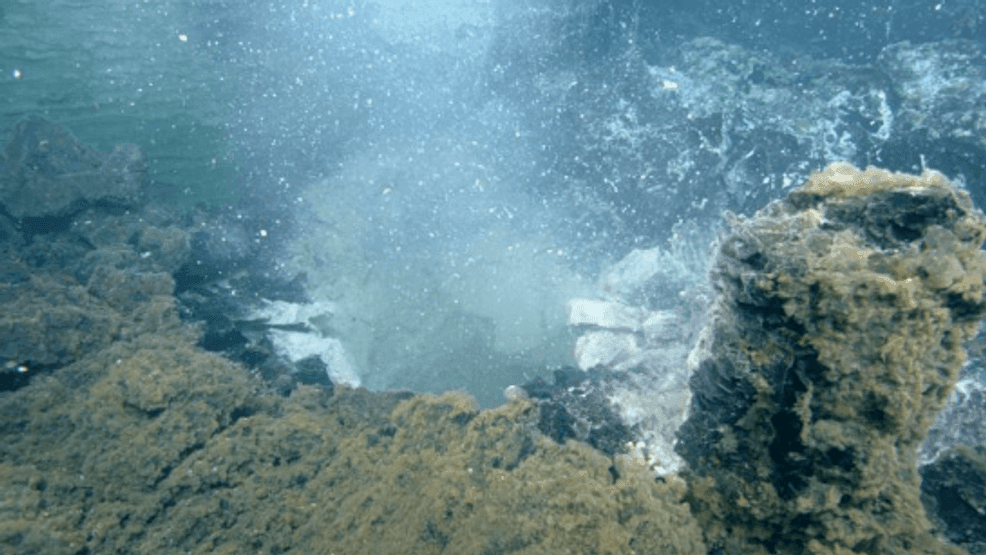
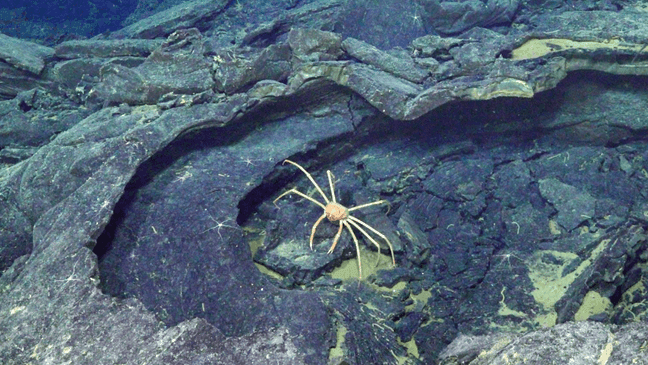
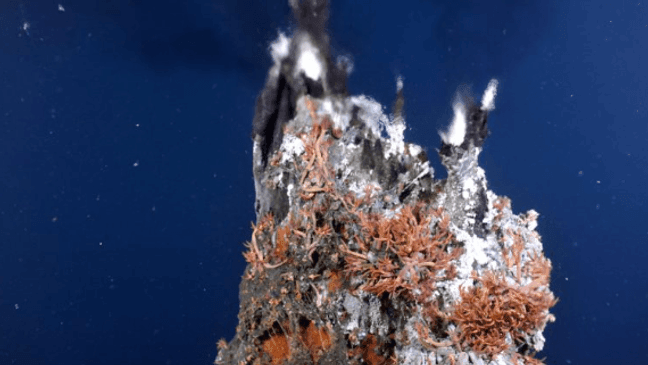

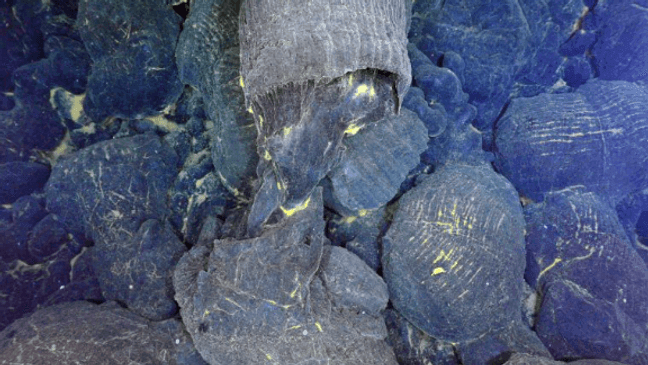
Microbes and their waste material stream from this “snowblower” vent on Axial Seamount three months after its eruption in 2011. (University of Washington)


SEATTLE — The Pacific Northwest's most active underwater volcano is showing signs of an impending eruption, potentially occurring before the end of 2025, according to researchers at the University of Washington.
Located 300 miles off the Oregon coast and more than 4,900 feet below the Pacific Ocean's surface, Axial Seamount last erupted in 2015.
SEE ALSO | Mount Rainier monitored closely as scientists keep watch for signs of volcanic activity
The Ocean Observatories Initiative's Regional Cabled Array, a network of sensors spanning the Juan de Fuca tectonic plate, provides real-time data from 150 instruments, offering scientists a unique opportunity to study the volcano's activity.
“Over two-thirds of the Earth’s surface was formed by volcanic eruptions at these mid-ocean ridges,” said Maya Tolstoy, a marine geophysicist and Maggie Walker Dean of the UW College of the Environment. “So the volcano is formed by these really fundamental processes that shape our planet.”
William Wilcock, a professor in the UW School of Oceanography, described Axial Seamount as "a genuine hotspot," noting its large caldera formed by the collapse of its magma chamber.
Despite its remote location, the volcano's eruptions are closely monitored due to their potential to provide insights into geological and biological processes.
Deborah Kelley, director of the Regional Cabled Array, highlighted the rich ecosystems supported by hydrothermal vents at the volcano. "When you get to the vent fields, you realize that the volcano is an oasis of life," she said.
While Axial Seamount's eruptions are not expected to impact land or trigger major earthquakes, they offer a rare chance for scientists to observe volcanic activity in real-time.
SEE ALSO | Relive the survival story of a KOMO photographer during the Mount St. Helens eruption
The first sign of an eruption is a sharp increase in earthquakes around the volcano, followed by lava flows and the formation of "snowblowers" — plumes of warm fluids containing microbes.
Researchers are eager to learn more about the factors influencing eruptions, including the role of tidal effects and gravitational forces.
As UW scientists await the next eruption, they are prepared to gather extensive data and share their findings with the world. "The last eruption brought our community together in a really exciting way," Tolstoy said. "It’s such an amazing opportunity to observe one of our planet’s most important processes, and I think we’re all looking forward to it."
