
Photo gallery: Rare white catfish gaining ground in the Tennessee River

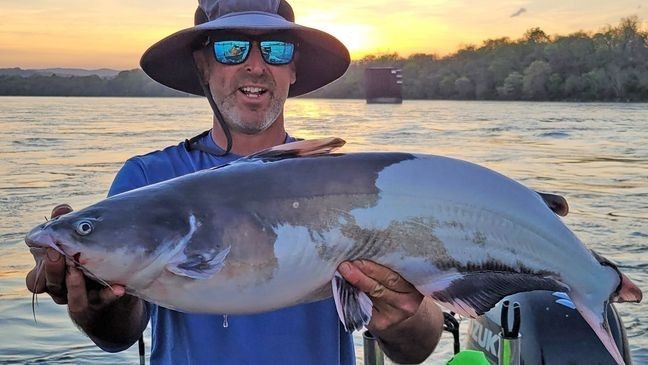

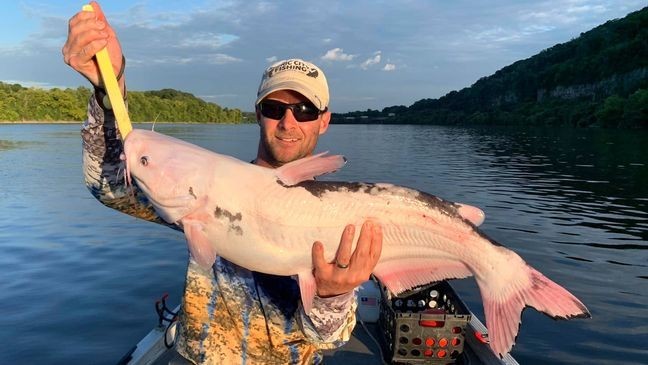


CHATTANOOGA, Tenn. (WTVC) — Rare "piebald catfish" are showing up in ever-increasing numbers in the Tennessee River near Chattanooga.
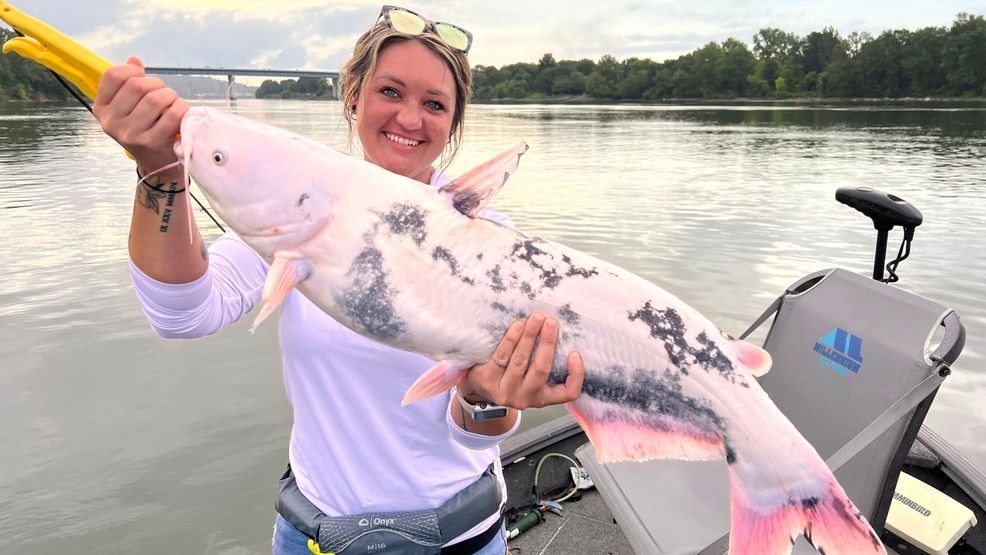
Piebald coloration - also referred to as leucistic - is a rare color phase in which an animal or fish's skin lacks all color pigmentation (appearing as white). The white areas can appear as splotches or in some cases, cover the entire fish.
It is different from an albino, which is always characterized by a total loss of melanin, resulting in white or pale coloration with pinkish or reddish eyes and fins.
I have been targeting catfish almost exclusively in these waters for at least 30 years. My clients and I have boated literally tens of thousands of catfish over the years. For 25 of those years, I never caught, nor had any of my catfishing friends catch, a piebald catfish. The first one I knew of personally was caught by fellow fishing guide, Capt. Sam Simons, in 2019.
Every year since then, my guide partners and I have caught increasing numbers, seemingly more and more each year - as have many other area catfishermen. Most recently (July 2) Brandon Abston caught this large piebald, or leucistic, catfish near Chattanooga. You can tell it is not an albino, however, because it lacks the characteristic pink eye.
Just a few days prior to that catch (June 30), one of my clients, Brittany Sapp, caught the striking piebald pictured at the top of this article - mostly white with splashes of blue catfish coloration remaining.
In the last three years, Scenic City Fishing Charters clients, along with other hardcore catfishermen I know, have caught more than 15 piebald cats. (see Photo Gallery)
Our is not the only area where this phenomenon occurs. Milford Lake in Kansas has become well known for its numbers of leucistic and piebald catfish. According to this recent story from KSNT.com, biologists in Kansas conducted electrofishing surveys on the lake and found that more than 13 percent of the blue catfish in the lake were piebald or leucistic.
Based on known local catches, the percentage in Chattanooga-area waters are not anywhere close to that number. Piebald catfish are still exceedingly rare and considered sort of the "Holy Grail" among serious catfish anglers locally. But the numbers are clearly increasing.
Professional catfishing guide Capt. Aaron Massey said, "When your client is reeling in what you might think is just a 15-pound catfish - routine in our area - then it comes close to the boat and you realize it's a piebald, a routine catch suddenly becomes a lot more exciting."
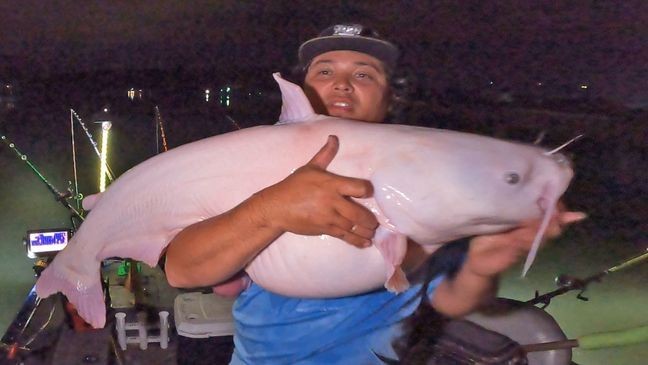
The unique fish always create a huge stir on the Internet. Three years ago the story and photo of Edwards Tarumianz, first posted on NewsChannel9.com/Outdoors, went viral and was carried by media outlets around the globe - appearing in Field & Stream, Newsweek, USA Today and multiple other news outlets around the world.
Every such catfish I know of was released, as Tarumianz did as well:
No doubt releasing those fish back into the gene pool has a great deal to do with the increasing numbers showing up now. There is little doubt that the genes resulting in the mutation are being passed down from generation to generation.
The increasing numbers of leucistic blue cats in our area is proof that catch & release works to keep favorable genes in our waters," Capt. Massey said. "That can result in more trophy fish that grow bigger and faster, as well as these rare piebald blue catfish.
But don't ever think you are going to go out on the river and catch a white catfish. It's a hard thing to measure, but chances are you would still be better off buying a lottery ticket.
But, if you catch one, please share it with us at our online gallery here.
Check out our photo gallery above to see more great photos of these fascinating fish.
